Cheney Silk
The Fabric of Life and Labor in a Connecticut Mill Community
Imagine taking a step back in time and experiencing an American mill town during the late 19th and early 20th centuries. While popular culture and literature tend to portray the mill experience as one of unrelenting toil, poverty, and harsh working conditions, the true story of the factory system is much more complex.
Cheney Silk, explores the relationship between factory owners and workers through non-linear storytelling, first-person account, and traditional historical narratives to create a rich and vivid picture of life during the height of the Industrial Revolution.
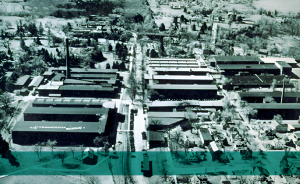
About the Project
The Making of Cheney Silk
“About” pages typically serve as a way to give credit to the members of the project team and a thank you to the funders who made the project possible. While our “About” pages do that, they also address the interests people who want to know what went on behind the scenes.
This particular section of the project is aimed at people who also produce public history or digital humanities themselves, and are interested in how and why we did what we did, and the evolution of our thought process as we sought to combine primary source content, technology, and good storytelling for a a variety of audiences and the often overlooked by vitally important development of the overall design of the site and the project elements.
Who We Are not only introduces the people who made Cheney Silk possible, but the philosophy of “radical collaboration” that infuses Greenhouse Studios and the work we do.
How and Why explains the relationship between the medium and message. Rather than choosing a platform first, we allowed the ideas we wanted to present and the methods and tools we chose to use to present them to develop over the course of the project.
The Making Of… takes you through the process of designing the visual identity of the project from logos, to colors, to navigation, and more. The best design is invisible to the user, who moves through the site smoothly. The smoother the user experience the more work that went into creating and testing it.
For those of you interested in the how and the why rather than the what, we hope you enjoy this section of Cheney Silk.
Historical Narratives
Historical essays tell the story of the Cheney mills looking back from today’s perspective.
How did it happen that Manchester Connecticut became one of the centers of the silk industry? What made it a destination for immigrants of so many nationalities–and NOT a destination for so many others? These narrative essays probe questions like these from the perspective of a modern historian looking back at a past era.
Historical narratives shine a light on larger influences and outcomes that participants in historical events couldn’t possibly know. For example, a mill worker or owner could understand the origins and current situations of the world of 1927, but would not be able to predict the effect of the Great Depression, world war, synthetic fibers, and the lure of low wage, anti-union towns in the American South and later Asia.
Welfare Capitalism and the American Dream traces the arc of the industrial revolution in America from its origins in the late-1700s through the migration of mills and jobs to the American South in the 1950s. It provides an overview of the world in which our personal stories unfold.
The Cheneys actively recruited workers to come to Manchester to work in their mills. But only certain types of workers, with certain skills, and from certain places. Europeans in America looks at the people who came to the mills, where they came from, and why.
After arriving in Manchester, workers built a life that was nearly entirely dictated by the paternalistic system the Cheneys developed over the years. What was this life like? How did it compare to working in other towns, other mills? Mill Workers’ Home Life looks at what it was like to live in a company town and can help understand what the workers are experiencing as they tell their own stories.
Lifestyle Inequality examines what became a vast economic difference between workers and mill owners. While the Cheneys continually believed that they were doing what was best for “their” workers, it didn’t stop them from becoming fabulously wealthy at the expense of those same workers.
And yet, by any standard of the time the millworkers, even the children documented by Lewis Hine experienced Favorable Working Conditions, his photos from the National Child Labor Committee gives us a look at how mill work was perceived by people at the time.
Finally, Labor Unions tells a story that is either about the triumph of the common man or the death of the mill economy, depending upon your attitude. Find out about labor unions in the silk industry and understand what the labor organizers in Manchester were fighting for.
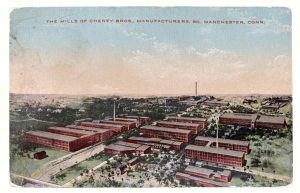
Cheney Silk Collaborators (In Alphabetical Order)
Greg Colati. Greg contributed ideas that helped shape the project during the understand and identify phases. In the build phase he did research and story writing, contributed to design and organizational decisions, and helped edit the site.
Ken Foote. Ken contributed ideas that helped shape the project during the understand and identify phases.
Brooke Foti Gemmell. Brooke contributed ideas that helped shape the project during the understand and identify phases. In the build phase she managed the designers, did research, and story writing, contributed to design and organizational decisions, and helped edit the site. Brooke also tangled with StoryMap features to make it possible to link across stories and collections.
Wes Hamrick. Wes contributed ideas that helped shape the project during the understand and identify phases. In the build phase he did research and story writing, contributed to design and organizational decisions, and helped edit the site.
Michael Howser. Michael is the Repository Manager of the Connecticut Digital Archive. In the build phase Michael was responsible for research in photo editing, and for copy editing the site.
Alyssa McDonald. Alyssa is a UX designer. While a member of Greenhouse Studios, she contributed ideas that helped shape the project during the understand and identify phases. Alyssa designed and facilitated brand identity workshops, and persona development workshops during the build stage.
Roya Movahed. In the build phase Roya was the primary graphic and theme designer. With input from the project team, Roya designed the site logo and color scheme, and the navigational icons, among other activities.
Benjamin Pitt. Ben contributed research and copyediting to the final phase of the project, and worked on context linking among the stories.
Vaia Poursaitidou. Vaia was a CT Digital Archive intern in the Spring of 2023. In the build phase, Vaia did research and story writing and contributed to design and organizational decisions
Arden Ricciardone. Arden contributed copyediting and outreach assistance to the final phase of the project. She helped plan the dissemination program.
Kenia Rodriguez. Kenia contributed ideas that helped shape the project during the understand and identify phases. In the build phase she took on project management responsibilities did research and story writing, contributed to design and organizational decisions, and was the primary site editor.
Sara Sikes. Sara was the facilitator during the understand and identify phases and contributed ideas that helped shape the project. In the build phase she did research and story writing, contributed to design and organizational decisions, and helped edit the site.
Cameron Slocum. Cameron developed digital assets during the build phase including branding for the Spacely company, design and 3D modeling for the mood decoder as well as the patent application, and photo editing and compositing.
Christina Volpe. Christina is a public historian. She contributed ideas that helped shape the project during the understand and identify phases.
Carly Wanner-Hyde. Carly is a Product Designer. While a member of Greenhouse Studios she designed and facilitated brand identity workshops, and persona development workshops during the build stage.