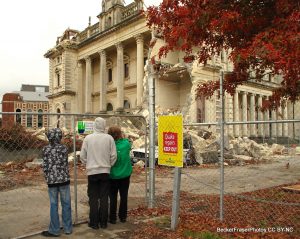
Greenhouse Studios, together with the Digital Humanities and Media Studies Initiative of the UConn Humanities Institute is pleased to co-host colleagues from Te Whare Wānanga o Waitaha | University of Canterbury in Ōtautahi | Christchurch, Aotearoa | New Zealand.
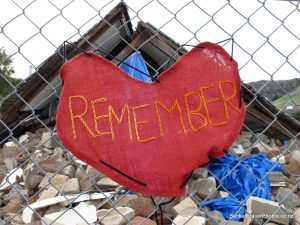
Panel with Q&A
Thursday, April 20, 2023 at 3:00 p.m.
Heritage Room, 4118
Level 4, Homer Babbidge Library
Kōrero Mai: Three approaches to collecting disaster narratives
This seminar presents three research projects which collected and analyzed the stories and memories of the people of Ōtautahi Christchurch, Aotearoa New Zealand after earthquakes devastated the city in 2010-2011. QuakeBox’s mobile recording studio invited passers-by to “Kōrero mai. Tell us your earthquake story.” Women’s Voices, a community-led oral history project, focused on the earthquake stories of women. And Understanding Place connected stories to place, mapping participants’ movements through 600 hectares of damaged land designated “red zone” and cleared of houses. We describe the challenges and successes of each of these projects, and reflect on the tools and processes used to explore the data.
Presenting from Te Whare Wānanga o Waitaha | University of Canterbury
Kaspar Middendorf, Manager, Arts Digital Lab
Karin Stahel, Research Assistant, Arts Digital Lab
Professor Paul Millar, English Department
Professor Donald Matheson, Media and Communications Department
Associate Professor Rosemary Du Plessis, Adjunct, Sociology Department
Workshop – Bring Your Laptop!
Friday, April 21, 2023 at 1:00 p.m.
Instruction Room 1102
Level 1, Homer Babbidge Library
Collecting and Analyzing Disaster Narratives
In this workshop we will consider closely the successes, challenges, and lessons learnt from collecting the stories of the people of Ōtautahi Christchurch (New Zealand) after earthquakes devastated the city in 2010-2011. This will be an opportunity to discuss methods and share ideas on data collection and digital/disaster archiving in general. We will consider different approaches to analysis and consider how the research potential of collections can be impacted by data collection decisions. The workshop will include a practical element with the chance to apply a variety of text analysis methods to the QuakeBox corpus using Python and Jupyter notebooks.
Conducted by Te Whare Wānanga o Waitaha | University of Canterbury Colleagues
Kaspar Middendorf, Manager, Arts Digital Lab
Karin Stahel, Research Assistant, Arts Digital Lab
Bios
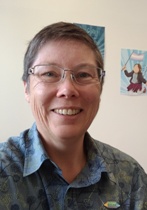
Kaspar Middendorf is the Manager of the Arts Digital Lab, and was part of the team that developed the CEISMIC Canterbury Earthquakes Digital Archive. They have contributed to a number of major research projects, including QuakeBox Take 2, Understanding Place, and the Canterbury Roll digitisation project. Kaspar has qualifications in mathematics, linguistics and secondary teaching, and completed their MLING thesis in 2017, using statistical modeling to compare syntactic structures in the QuakeBox spoken language corpus with the written language of the Christchurch Press.
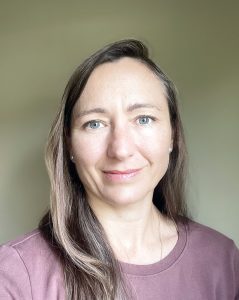
Karin Stahel is a postgraduate student and teaching assistant in Data Science and Digital Humanities, and Research Assistant in the Arts Digital Lab. She completed the Master of Applied Data Science (MADS) programme at UC in 2021, and since then has assisted with research on a number of QuakeBox projects in the Arts Digital Lab. Karin is a recipient of the UC Aho Hīnātore | Accelerator Scholarship in 2023 and her research will explore the use of machine learning algorithms to classify the genre of articles in historical New Zealand newspapers.
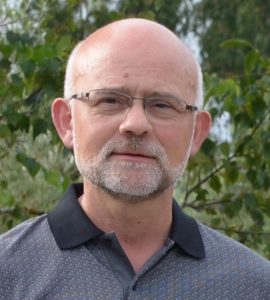
Paul Millar is a Professor of English Literature and Digital Humanities in the University of Canterbury’s School of Humanities and Creative Arts. His research interests include the literature of Aotearoa New Zealand, Life Writing, and Cultural Heritage Digital Archiving. In 2001 he co-founded Victoria University of Wellington’s New Zealand Electronic Text Collection, and at UC he led the establishment of New Zealand’s first Digital Humanities teaching programme. Following the Canterbury earthquakes he founded the CEISMIC Canterbury Earthquakes Digital Archive (www.ceismic.org.nz), a cultural heritage database that collects stories, images and media about the earthquakes’ impacts for the purposes of commemoration, teaching and research. In 2022 he was awarded The Royal Society / Te Apārangi Pou Aronui medal ‘for distinguished service to humanities aronui over a sustained period’ in recognition of his promotion of the Digital Humanities in New Zealand.
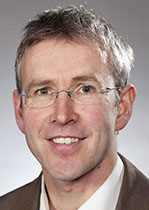
Donald Matheson is a Professor in Media and Communications. His research interests lie in journalism studies, with a particular emphasis on discourse analysis of journalists’ writing practices. This interest has taken him towards researching journalism in new media, as well as historical and ethical aspects of newswriting. Donald is also interested in journalism sociology and in the study of alternative media. He is the current president of the Australia New Zealand Communication Association.
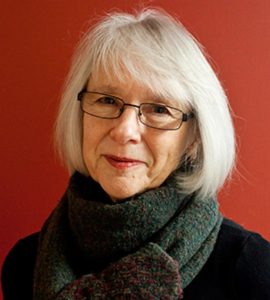
Rosemary Du Plessis is an Adjunct Associate Professor in Sociology with a strong interest in gender, family, work, embodiment and personal narratives. She taught Sociology at University of Canterbury for many years and has been involved in earthquake related research for over a decade. She was research coordinator for the NCWNZ Christchurch Branch ‘Women’s Voices/Ngā Reo o Ngā Wahine’ project 2011 – 2013 that recorded women’s experiences of the Christchurch earthquakes. Outputs from this research are archived in UC QuakeStudies. She worked closely with the UC Arts Digital Lab to archive this research material. Together with Dr Louise Tapper, she has recently researched young women’s experiences of the 2020 COVID-19 lockdowns. Transcripts of these interviews have been processed through the ADL and can be accessed via UC QuakeStudies. Rosemary is currently a member of the QuakeBox Take2 team, based in Digital Humanities at UC. Earthquake stories recorded in 2012 are now being analyzed alongside the retelling and updating of these earthquake narratives in 2019 and 2020.