
Assembling a Team

In addition to planning the activities that would take place during the sprint, one of our first tasks was to assemble a diverse team of collaborators. The strength of Pascal and Menard’s proposal suggested that the project could draw support not just from the College of Engineering, but also from other schools and colleges at UConn. Given the university’s long heritage as an agricultural school and its particular strengths in agricultural science, it was clear to us that CAHNR could play an important role going forward. To that end, we were fortunate to add Rich Meinert and Nick Goltz to the project team. Likewise, we hoped to draw from UConn’s award-winning Dining Services department, especially as we began thinking about the possibility of having an on-campus brewery or tap room. Andy Iverson not only brought expertise in food service management, but also happened to be a knowledgeable craft beer enthusiast. Finally, we understood that an essential piece of the puzzle would be someone with expertise in business and entrepreneurship. The first person that came to mind was Jennifer Mathieu, Executive Director of the Connecticut Center for Entrepreneurship and Innovation (CCEI). (Our relationship with CCEI dates to 2019, when we participated in Accelerate UConn for the Sourcery project.)
Design Thinking for Scaling Up
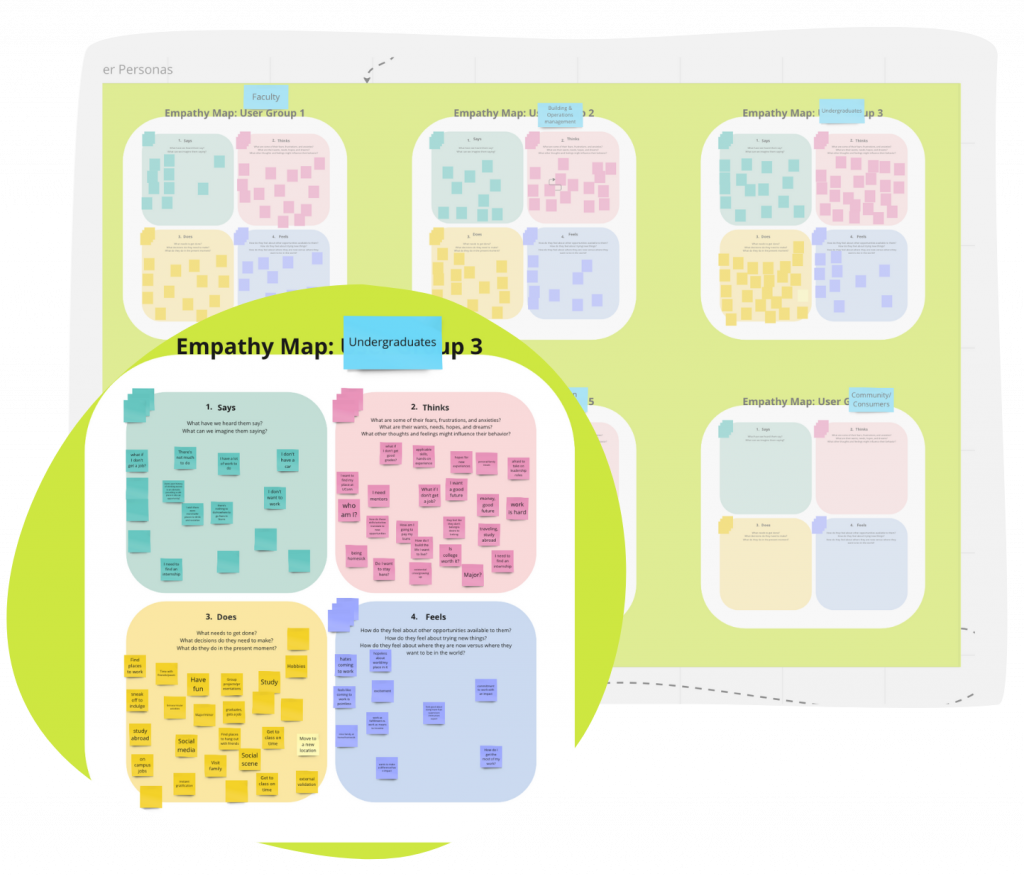
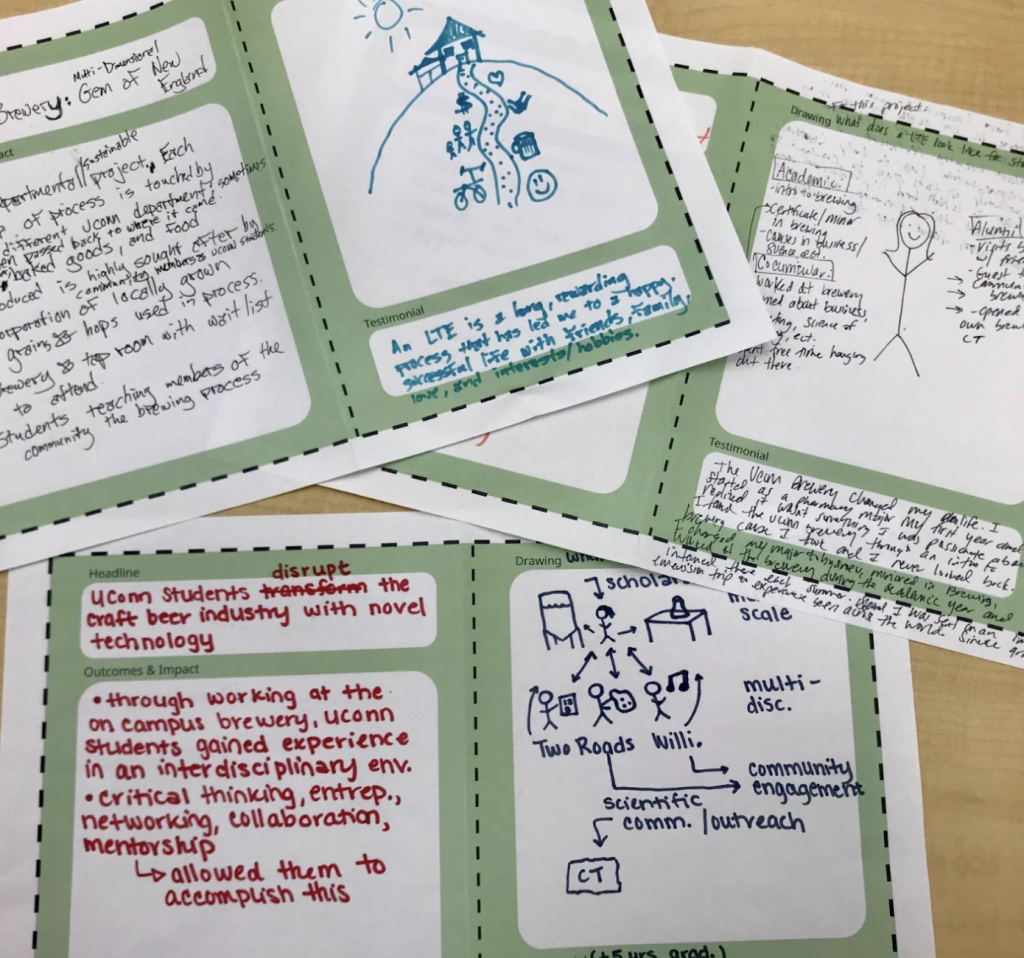 The sprint sessions were scheduled on five separate days over the course of two weeks. In the first half of the design sprint, “we led the team through exercises that facilitated divergent thinking and open ideation about the forms the project could take. In an activity called “Headlines from the Future,” the team was also tasked with imagining what success might look like five years down the road, and asked to imagine what a UConn student might say about how the project impacted their undergraduate education. In addition, the team cataloged the various networks available to them – both at UConn and beyond, as well as their resources and constraints, both individually and institutionally. We also led the team through a process of “empathy mapping,” where the team thinks imaginatively and broadly about the needs of specific stakeholders, including students, faculty, parents, administrators, and alumni.
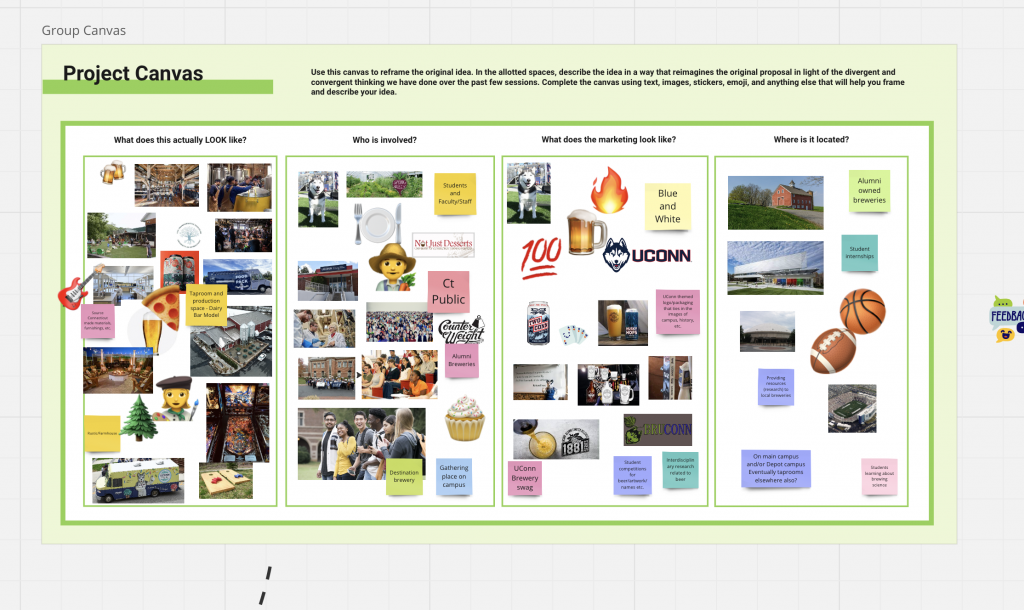
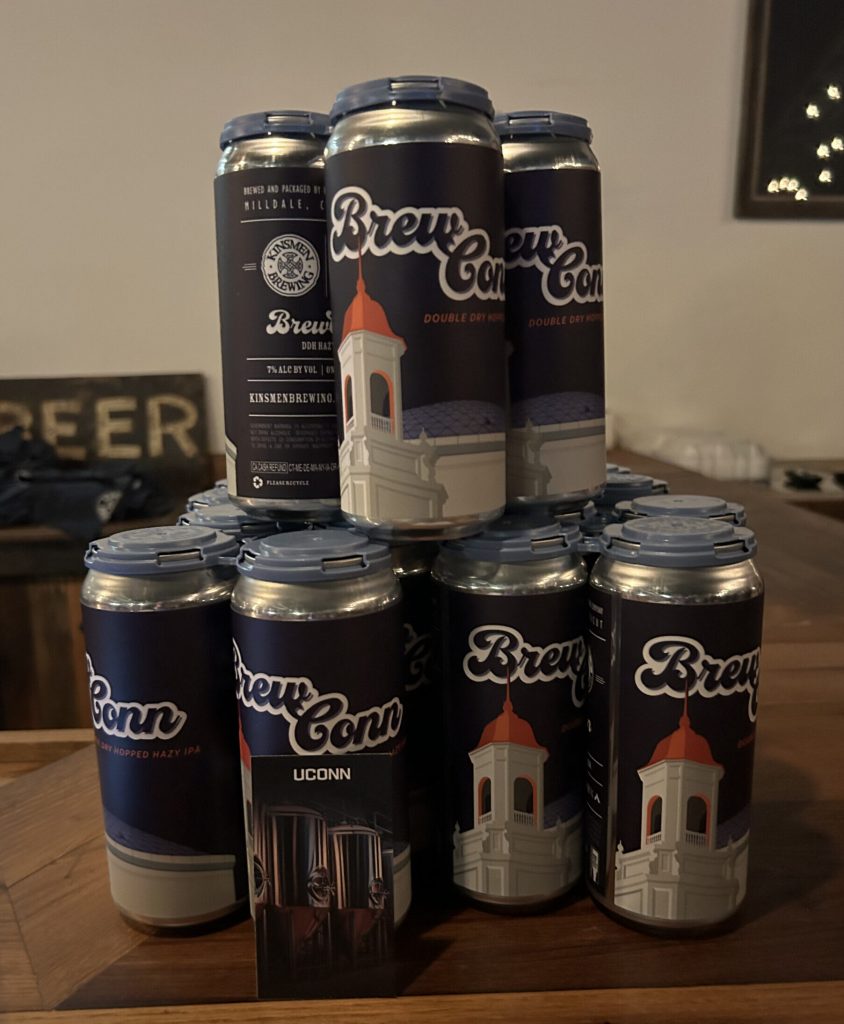
During the second half of the design sprint, we had the team begin thinking more concretely and convergently about the direction they might go. After the open-ended, constraint-free ideation undertaken in the early part of the sprint, we asked the team to narrow their vision for the project and focus on the areas that seemed to have the most possibility. In order to develop a more concrete vision for the project, we asked the team to “Make it Visual” by creating a visual representation of the future project. Using images from the web, emoji, and stickers, the team visualized everything from the décor of the proposed taproom and its geographic location on campus, to possible marketing materials and artwork for the cans.
Putting it All Together
What often happens in design thinking work like this, is that the project team will develop a lot of good ideas and think creatively about what they might like to do, but at the end of the sprint the facilitators go away and the client or project team is left to pick up the pieces and figure out what to do next. To keep the project moving forward, the team’s final task was to begin drafting a comprehensive project proposal that they would come back and present a few weeks later to university administrators with a view toward gaining additional funding and support.
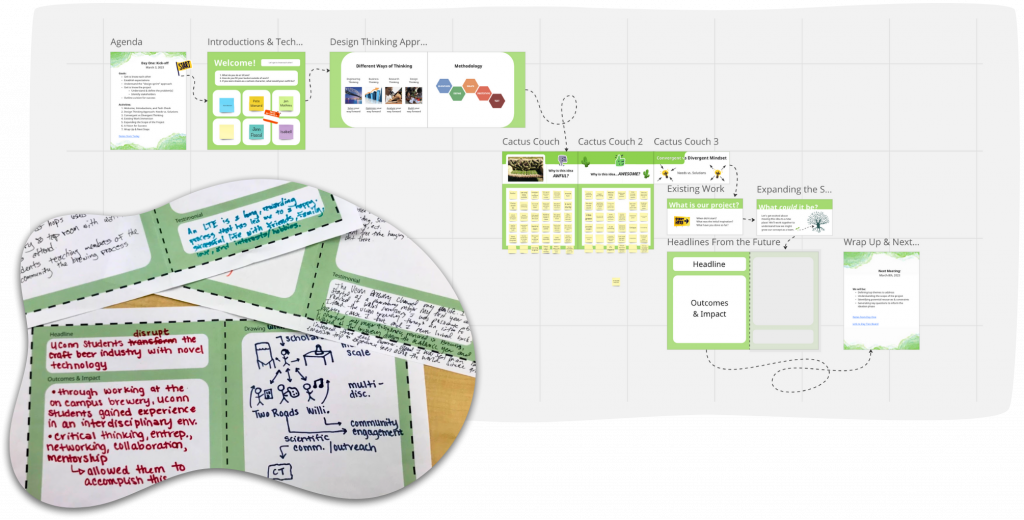
With this eventuality in mind, we constructed the design process, from start to finish, so that all the work the team undertook over the five days of the sprint would inform the project proposal. In fact, each activity of the sprint sessions was designed to directly feed into the different sections of the proposal template we drew up for the team. For instance, the section of the proposal concerned with “Stakeholders” drew directly from the Day 3 empathy mapping exercise. Meanwhile, the “Work Plan and Budget” section of the proposal was informed by insights gained during the “Two Radically Different Project Visions” exercise and the catalog of “Resources and Constraints” undertaken on Day 2 and Day 3 of the sprint.
At Greenhouse Studios we have continuously refined our design process, working almost exclusively on academic research projects. However, the scaling sprint gave us the chance to take what we have learned about collaboration over the past five years and adapt it to a non-academic project. The success of the brewery project – now UConn Brewing Innovation – is ultimately due to the hard work and creativity of the project team members. But its success has also shown us that our expertise in collaboration and design thinking can be generalized to a much broader range of projects, something we look forward to doing more of in the future.
